Tampilkan postingan dengan label English News. Tampilkan semua postingan

Indonesia Takes Delivery Of First Two Airbus Military C295 Aircraft

MADRID-(IDB) : Indonesia has taken delivery of two Airbus Military C295 transport aircraft ordered in February this year. The aircraft are the first of nine to be delivered to the Indonesian Ministry of Defence under the terms of a contract signed by Airbus Military and PT Dirgantara Indonesia (PT DI).


The delivery took place in the Airbus Military San Pablo site in Seville, where the C295 final assembly line is located, at a ceremony attended by the Indonesian Vice Minister of Defence, Lt. Gen. (ret) Sjafrie Sjamsoeddin, and Airbus Military Vice President Head of Programmes Light & Medium and Derivatives, Rafael Tentor. 


The aircraft will be operated by the Indonesian Air Force and known in service as the CN295. It will perform a wide variety of roles including military, logistical, humanitarian and medical evacuation missions throughout the huge territory of Indonesia, which includes around 17,000 islands. The delivery of the ninth and last aircraft ordered is scheduled for summer 2014.


Rafael Tentor said: “The delivery of these aircraft is an important step in Airbus Military´s collaboration with the Indonesian aerospace industry and we greatly look forward to increasing our level of co-operation in the years ahead.” To date, Airbus Military has sold 114 C295s. After the entry in service of these aircraft there will be 88 C295s in operation in 15 countries all over the world.The attached photograph shows the delivery ceremony held in Seville.


https://blogger.googleusercontent.com/img/b/R29vZ2xl/AVvXsEixlOPbR3CwSxiTlPH7YVAAKSm_7JAZ69_PxTHoX611x-D7yYySgi5_hCQ2EUwLKmFe3jbckTvOcP_6U43ghb3aXJvFseqa22J7zmjrqjCTpvvC3HlCSnO8nzq4AH4GmjbROQI9elCmmPHo/s1600/C295_TNI+AU.jpg-large
C295 A2901 (TNI AU)

About C295

 
The new generation C295 is the ideal aircraft for defence and civic mission to the benefit of society, such as humanitarian actions, maritime patrol, and environmental surveillance missions, amongst others. Thanks to its robustness and reliability, and with simple systems, this medium sized tactical airlifter provides wide versatility and flexibility, necessary for personnel, troop and bulky/palletized cargo transportation, casualty evacuation, communication and logistic duties or certified air-dropping capabilities.  Its mix of dual technology civil/military equipment ensure success on demanding tactical mission, growth potential for future equipment as well as compatibility with the latest civil airspace environment. The C295 is part of Airbus Military’s family of light and medium airlifters which also include the smaller C212 and CN235 platforms.  


Source : AirbushMilitary

Taiwan To Build Six Minehunters

photoTAIPEI-(IDB) : Taiwan plans to spend $1.2 billion on building six minehunters as part of efforts to negate China’s ability to blockade the island in a future conflict, a legislator said Monday.

The minehunters will be built between 2013 and 2025, according to Lin Yu-fang, a legislator of the ruling Kuomintang party who sits on parliament’s defence committee. He was citing the defence ministry’s draft 2013 budget.

“Once the project is completed, the navy’s anti-blockade capabilities will be enhanced significantly,” he said in a statement, adding that the budget, scheduled to total Tw$35.9 billion, was pending parliament’s final approval.

Last month Taiwan received two Osprey class minehunters, the second largest vessel of its kind in the world, from the United States, the island’s leading arms supplier despite a lack of diplomatic ties since 1979.

Ties between Taiwan and giant neighbour China have improved markedly since Ma Ying-jeou of the Beijing-friendly Kuomintang came to power in 2008 on a platform of beefing up trade and tourism links with the mainland.

But Beijing still sees Taiwan as part of its territory awaiting reunification, by force if necessary, even though the island has governed itself since their split at the end of a civil war in 1949.
China has repeatedly threatened to use military force against Taiwan should the island declare formal independence, prompting Taipei to seek more advanced weapons.

A blockade is one of the ways in which China is considered likely to exert military pressure on Taiwan, as a full-scale D-day style invasion might be far too costly for the mainland military.


Source : Defencetalk

Chinese Warships Dock in Israel

TEL AVIV-(IDB) : Three Chinese warships from the People’s Liberation Army Navy (PLAN) docked in Haifa Aug. 13 for a five-day visit here as guests of the Israel Navy.

Led by Rear Adm. Yang Junfei, deputy commander of the PLAN’s North China Sea Fleet, the Chinese contingent will tour multiple sites throughout the country in honor of the 20th anniversary of diplomatic ties between Jerusalem and Beijing.

Last month, Yang met with EU Naval Force (NAVFOR) Commander, Rear Adm. Jean-Baptiste Dupuis, aboard the French command and replenishment ship Marne, which was plying the waters of the Gulf of Aden. At the time of the July 17 visit, an EU NAVFOR spokesman noted the need for enhanced cooperation with the PLAN’s anti-piracy task force operating in the Gulf of Aden and off the coast of Somalia.

“The significant number of actors who are committed in counter-piracy makes regular contact essential [for] de-confliction ... and coordinated actions where appropriate to increase the effectiveness of the various navies present in the area,” according to the EU NAVFOR spokesman.
Israel has hinted at, but has not publicly acknowledged, anti-smuggling and counterterror operations around the Horn of Africa and into the Arabian Sea. In an interview last spring, Lt. Gen. Benny Gantz, Israel Defense Forces (IDF) chief of staff, told Israel’s Yediot Ahronot, “You almost won’t find a point in time that nothing is happening somewhere around the world.”

Gantz spent a week in China last May as guest of PLA Commander Gen. Chen Bindnge. It was the first visit by an IDF chief of staff since 1996 and was aimed to strengthen Sino-Israeli ties in light of Beijing’s growing interests in the Mediterranean and Arabian Gulf regions.


Source : DefenceNews

Embraer Delivers The First Four A-29 Super Tucano to Indonesian Air Force

SAO PAULO-(IDB) : Embraer Defense and Security has today delivered four light attack and tactical training A-29 Super Tucano aircraft to Indonesia’s Air Force at a ceremony held in its facility in Gavião Peixoto, São Paulo, Brazil. Indonesia is the first operator of Super Tucano in the Asia-Pacific region.

These four A-29 Super Tucano are from the initial batch of eight aircraft purchased by the Indonesian Air Force (IAF) in 2010. The IAF has since ordered a second batch of eight Super Tucanos as part of their equipment modernization exercise, bringing the total number of orders to 16 aircraft.

“We are honored that the Indonesian Air force has selected the A-29 Super Tucano as the preferred choice in their fleet modernization program”, said Luiz Carlos Aguiar, President of Embraer Defense and Security. “The Super Tucano is a mature, proven and mission-ready aircraft with more than 160 units in operation globally.”

The Super Tucano was chosen by the Indonesian Defense Forces to replace a fleet of OV-10 Broncos as part of their equipment modernization exercise for years 2009 – 2014. With more than 157,000 flight hours and over 23,000 combat hours achieved, the Super Tucano offers the flexibility to perform a broad range of missions including light attack, surveillance, air-to-air interception and counter insurgence. The aircraft makes excellent use of the most recent electronic, optical, infra-red and laser technologies, as well as secure radio communications with data-link, and an unparalleled weaponry capability, making it highly reliable and at a top-level cost/benefit ratio for a wide range of military missions, even operating from unpaved runways.


Source : Embraer

Indonesia China Begin Missile Talks

JAKARTA-(IDB) : China and Indonesia have started talks on the ambitious local production of C-705 anti-ship missiles
as part of Indonesia’s efforts to achieve independence in weapons production.

The defense cooperation reflects strengthening ties between both countries amid heightening tension in the South China Sea involving China and a number of Indonesia’s ASEAN neighbors.

Defense Ministry chief spokesman Brig. Gen. Hartind Asrin said that the initial talks were conducted during the first China-Indonesia defense industry cooperation meeting held in Jakarta on Wednesday.

The ministry’s defense potential director general Pos M. Hutabarat hosted the Chinese delegation which was led by Liu Yunfeng, a deputy director general at the Chinese State Administration for Science, Technology and Industry for National Defense (SASTIND).

“The meeting discussed various efforts to improve cooperation between the defense industries of both countries,” Hartind said on Thursday. “We’ve already prepared an area for the [missile] production site that faces the open sea for trials.”

Hartind said the C-705 had a range of 120 kilometers.

He said that the Indonesian Navy had successfully test-fired the C-705 missiles in the Sunda Strait.

“China has also offered to donate weapons systems that Indonesia might need,” he added.

A source said that Indonesia was expected to reply to Phase 1 of the missile proposal at the end of August and Phase 2 one month later. A contract is expected to be signed in 2013.

Phase 1 is on semi-knocked down production while Phase 2 is on completely-knocked down production.

A proposal for a Phase 3 on research and development is already on the table although the focus is currently on the first two phases.

Aside from the missile production, a number of Indonesian Army Special Force Command (Kopassus) members recently conducted the second “Sharp Knife” joint exercise with Chinese Special Forces operatives earlier this month in Jinan, Shandong, China.

China has also offered to train 10 pilots from the Indonesian Air Force to train using a Sukhoi simulator in China.

Commenting on the defense cooperation, defense expert Andi
Widjajanto said the industrial cooperation was solely to gain access to more advanced technology.

“However, it will take a long time for us to be independent in the defense industry, perhaps after 2024. This is the reason Indonesia builds partnerships with many countries that possess modern military technologies,” he said. “This is also why we require partner countries to transfer their technologies to us in any agreement we sign with them.”

Andi added that there were two goals in terms of the partnership: to access advanced rocket technology, and to collaborate in upholding maritime security, which began when President Susilo Bambang Yudhoyono signed an agreement in March during a state visit to Beijing.

“I don’t believe it has anything to do with conflicts in the South China Sea,” he stressed.

Meanwhile, chairman of the House of Representatives’ Commission I on defense issues, Mahfudz Shiddiq, said such global partnerships in the defense industry were designed to develop Indonesia’s own industry.

“We have allocated Rp 150 trillion [US$15.8 billion] to modernize our weapons-defense system from 2010 to 2014. It would be wasteful paying such a huge amount to foreign defense industries without any attempt to improve our own,” he said.

“Therefore, we require partner countries to transfer their military technologies in the hope that they will gradually improve our own technologies.”

He added that the partnership with China was due to its advanced military technologies in fields such as rocketry. “This is not political, even though others might link the partnership to political issues, for example the South China Sea disputes,” Machfudz said.

Indonesia already cooperates on weapons production with several other countries including South Korea to build jet fighters and submarines, the Netherlands to build frigates and Spain to build medium transport aircraft.


Source : JakartaPost

U.K. To Order First Production F-35 for Training

LONDON-(IDB) : Britain is to order a fourth F-35B short-takeoff and vertical-landing (STOVL) fighter next year from builder Lockheed Martin. The aircraft will be the first production-standard F-35 destined for the training fleet, rather than the test and evaluation role being undertaken by the first three aircraft ordered by the British.

Defence Secretary Philip Hammond made the order announcement during the handover of the first of the aircraft at a ceremony at the U.S. contractor’s Fort Worth plant in Texas on July 19. The initial three aircraft were purchased at a cost of nearly 300 million pounds ($469.2 million) for test and evaluation, but the fourth will be used to give front-line pilots their first taste of training on the F-35.

The second evaluation aircraft will be delivered next month and the third is scheduled for handover in early 2013. The latest order will see the fourth aircraft delivered in the 2015-2016 time frame.

The British, the only full-scale international partner in the development of the Joint Strike Fighter, become the first country outside the United States to take delivery of an aircraft.

The fighter will be jointly operated by the Royal Navy and the Royal Air Force.

Hammond recently said that although no final decision had been made, the RAF jets were likely to be based at Marham, Norfolk, starting in 2018. Flight trials from the Royal Navy’s new Queen Elizabeth-class carrier will commence at about the same time.

The handover and new order follows a period of near farce when the British government managed two U-turns in quick succession on the variant of the F-35 it intended to operate.

An initial, long-standing decision to go for the B STOVL variant was overturned in favor of the C conventional carrier version, only for the Conservative-led coalition government to change its mind again a few months later when it became apparent that the cost of modifying the aircraft carriers now being built would be prohibitive.

The British have declined to give any information on aircraft order numbers ahead of the next strategic defense and security review, scheduled for 2015.


Source : DN

Israel Completes $1B Jet Trainer Deal

TEL AVIV-(IDB) : Israel has finalized its $1 billion deal to purchase 30 Alenia Aermacchi M-346 jet trainers to replace its A-4 Skyhawks, with the first delivery expected in mid-2014, Alenia Aermacchi said in a statement July 19.

The deal, which covers aircraft, engines, maintenance, logistics, simulators and training, is worth $600 million to the Italian firm, which is a unit of Finmeccanica.

Israel’s selection of the M-346, which has already been purchased by Italy and Singapore, was announced in February, but was followed by complex negotiations over a compensation package involving Italian purchases of Israeli technology.

In its statement, Finmeccanica referred to the Italian purchase of two Conformal Airborne Early Warning aircraft for the Italian Air Force, suggesting Italy has committed to buying two Israeli Gulfstream AEW aircraft as part of the compensation for the M-346 buy.

Finmeccanica unit Selex Elsag has been awarded a $41 million contract through Israel’s Elta Systems for the supply of “NATO-standard subsystems for communications, tactical links and identification” for the two aircraft. The firm has also been contracted to supply the “identification, communications and computer systems for flight control” of the 30 M-346 aircraft, Finmeccanica said.

Announcing the M-346 deal, Finmeccanica also said that Italy would acquire a high-resolution optical military satellite for Earth observation called OPTSAT-3000, built by Israel Aerospace Industries/MBT Space Division.

Italian satellite services company Telespazio, which is controlled by Finmeccanica, will act as prime contractor in the deal, and has signed a $200 million euro ($245.4 million) contract with the Italian Ministry of Defense. Telespazio will provide the entire system, including ground segment, launch services, placement in orbit and operational and logistical activities. Delivery of the satellite is planned in 2015.


Source : DN

Lockheed Martin Delivers Four F-35s To USAF And Marine Corps

WASHINGTON-(IDB) : With the delivery of four Lockheed Martin F-35 Lightning II aircraft since June 29, an important milestone was achieved as the Department of Defense now possesses more operational-coded F-35s than test aircraft. A total of nine F-35s have been delivered for the year, giving the DOD a total of 30 aircraft fleet-wide. Of these, 16 are operational aircraft and 14 are test planes.

“To date, the F-35 program has focused on system development and flight testing while most recently transitioning to low rate initial production,” said Orlando Carvalho, Lockheed Martin executive vice president and general manager, F-35 program.

“We’ve crossed a critical threshold as we begin delivering our LRIP 3 aircraft. We’re increasingly becoming more operationally focused. These deliveries illustrate the program’s natural progression and maturation that is taking place on a daily basis.”

The four aircraft, which were formally accepted by the Defense Contract Management Agency with the signing of Department of Defense Form 250 (DD-250), are the first jets manufactured as part of Low Rate Initial Production (LRIP) Lot 3.

They will begin ferrying to Eglin Air Force Base, Fla., in the coming days, bringing the total there to 16. The DOD has eight test aircraft at Naval Air Station Patuxent River, Md., and six test aircraft at Edwards Air Force Base, Calif.

Three of the jets are F-35A conventional takeoff and landing (CTOL) variants and will be assigned to the U.S. Air Force’s 33d Fighter Wing.

One F-35B short takeoff and vertical landing (STOVL) aircraft will be assigned to the 2nd Marine Aircraft Wing’s Marine Fighter/Attack Training Squadron 501. Once at Eglin, the 5th Generation fighters will be used for pilot and maintainer training at the base’s F-35 Integrated Training Center.

The F-35 Lightning II is a 5th Generation fighter, combining advanced stealth with fighter speed and agility, fully fused sensor information, network-enabled operations and advanced sustainment.

Three distinct variants of the F-35 will replace the A-10 and F-16 for the U.S. Air Force, the F/A-18 for the U.S. Navy, the F/A-18 and AV8-B Harrier for the U.S. Marine Corps, and a variety of fighters for at least nine other countries.

Source : Defencetalk

Mantis Concept Demonstrator Targeted to Fly In the UK

LONDON-(IDB) : BAE Systems has announced its intention to re-fly the Mantis UAS Concept Demonstrator – this time in UK airspace. This will be the first flight of a UAS (Unmanned Air System) of this class in UK airspace

Flying Mantis will enable the Company to continue to mature a number of UAS capabilities and technologies, underpinning BAE Systems’ strategy to become a world-class provider of unmanned air systems. 

The flight activity will support the development of future MALE (Medium Altitude Long Endurance) and UCAS (Unmanned Combat Air Systems) operational capabilities, including the programmes announced at the Anglo-French Summit in February this year. By looking to fly Mantis in the UK, BAE Systems is directly aiming to address the associated challenges of airspace integration and safe operation of an airborne system in accordance with UK rules and regulations.

Over the coming months the Company will be working with the appropriate regulators to fully understand the safety, airworthiness and regulatory frameworks which will enable such a flight to take place in 2013.

The Company is currently looking at a number of potential locations in the UK which meet the trials objectives and will work with a number of agencies on the feasibility, timing and location of the flights. These locations will be selected in full consultation with the relevant authorities.

Tom Fillingham, Future Combat Air Systems Director, BAE Systems said: “We will undertake a further phase of flight trials for the Mantis but this time rather than going overseas we have given ourselves the challenge to conduct the trials in the UK. To secure our position as a provider of key capabilities in the unmanned market it is necessary that we continue to develop key skills and capabilities. Learning from the re-flight of Mantis will be used in future UAS programmes, including our partnership with Dassault Aviation.”

Source : Defencetalk

Boeing And Embraer Sign Agreement to Collaborate on KC-390 Program

DT-(IDB) : The Boeing Company and Embraer today announced an agreement to collaborate on the KC-390 aircraft program. Under this agreement, Boeing and Embraer will share some specific technical knowledge and evaluate markets where they may join their sales efforts for medium-lift military transport opportunities.

“Boeing has extensive experience in military transport and air refueling aircraft, as well as deep knowledge of potential markets for the KC-390, especially those which were not considered in our original marketing plan,” said Luiz Carlos Aguiar, president and CEO of Embraer Defesa e Segurança. “This agreement will strengthen the KC-390′s prominent position in the global military transport market.”

The KC-390 collaboration is part of a broader agreement that Boeing and Embraer signed in April. The companies previously announced that they are exploring ways to cooperate in commercial airplane efficiency and safety, research and technology, and sustainable aviation biofuels. Boeing and Embraer will conduct a joint market assessment for the medium-lift military transport market and analyze business collaboration models. The market assessment includes potential customers that had not been considered in the initial market prospects for the KC-390.

“Embraer is a leading global innovator and we both understand the value of working in partnership to provide high-quality, affordable customer solutions,” said Dennis Muilenburg, president and CEO of Boeing Defense, Space & Security. “This collaboration matches Boeing’s proven excellence in military transport with Embraer’s KC-390 accomplishments to further advance this highly capable and efficient medium-lift aircraft.”

The KC-390 is a Brazilian Air Force project for which Embraer signed the development contract in April 2009. It is the biggest aircraft to be manufactured by the Brazilian aerospace industry and will set new standards in the medium-lift market in terms of performance, cargo capacity, flexibility, and life cycle costs.

Boeing has had a strong and enduring partnership with Brazil for 80 years, delivering the first F4B-4 fighters to the Brazilian government in 1932 and providing commercial airplanes to Brazilian airlines since 1960. Boeing opened its office in São Paulo in October.

Embraer S.A. is the world’s largest manufacturer of commercial jets up to 120 seats, and one of Brazil’s leading exporters. Embraer’s headquarters are located in São José dos Campos, São Paulo, and it has offices, industrial operations and customer service facilities in Brazil, China, France, Portugal, Singapore, and the U.S. On March 31, 2012, Embraer had a workforce of 17,629 employees — not counting the employees of its partially owned subsidiaries — and its firm order backlog totaled USD$14.7 billion.

Headquartered in Chicago, Illinois, USA, Boeing is the world’s largest aerospace company and leading manufacturer of commercial jetliners and military aircraft combined. Additionally, Boeing designs and manufactures rotorcraft, electronic and defense systems, missiles, satellites, launch vehicles and advanced information and communication systems.


Source : Defencetalk

Oman To Buy AIM-9X Block II Sidewinder All-Up-Round Missiles

OMAN-(IDB) : The Defense Security Cooperation Agency notified Congress on June 12 of a possible Foreign Military Sale to the Government of Oman for 55 AIM-9X Block II SIDEWINDER All-Up-Round Missiles, 36 AIM-9X Block II SIDEWINDER Captive Air Training Missiles, 6 AIM-9X Block II Tactical Guidance Units, 4 AIM-9X Block II Captive Air Training Missile Guidance Units, 1 Dummy Air Training Missile, and other related equipment.

The estimated cost is $86 million.

The Government of Oman has requested a possible sale of 55 AIM-9X Block II SIDEWINDER All-Up-Round Missiles, 36 AIM-9X Block II SIDEWINDER Captive Air Training Missiles, 6 AIM-9X Block II Tactical Guidance Units, 4 AIM-9X Block II Captive Air Training Missile Guidance Units, 1 Dummy Air Training Missile, containers, weapon support equipment, spare and repair parts, publications and technical documentation, personnel training and training equipment, U.S. Government and contractor technical support services, and other related elements of logistics support. The estimated cost is $86 million.

This proposed sale will contribute to the foreign policy and national security of the United States by helping to improve the security of a friendly country which has been, and continues to be, an important force for political stability and economic progress in the Middle East.

The Government of Oman is modernizing its F-16 fighter aircraft fleet to better support its own air defense needs. The proposed sale of AIM-9X Block II missiles will provide a significant increase in Oman’s defensive capability while enhancing interoperability with the U.S. and other allies.

Oman will have no difficulty absorbing this additional capability into its armed forces.

The proposed sale of this weapon system and support will not alter the basic military balance in the region.

The prime contractors will be Raytheon Missile Systems in Tucson, Arizona. There are no offset agreements proposed in connection with this potential sale.

Implementation of this proposed sale will require multiple trips to Oman involving U.S. Government or contractor representatives on a temporary basis for program and technical support, and management oversight.

There are no known offset agreements proposed in connection with this potential sale. There will be no adverse impact on U.S. defense readiness as a result of this proposed sale.

This notice of a potential sale is required by law and does not mean the sale has been concluded.

 
Source : Defencetalk

Cameroon Air Force Orders Airbus Military CN235

DT-(IDB) : Airbus Military is pleased to welcome the Cameroon Air Force as a new customer with an order for a single CN235 medium transport.

The CN235 is a robust aircraft with a six tonne payload that is well-proven in hot, dusty and humid conditions throughout Africa.

It is flexible and reliable with good short take-off and landing capability, and its cabin can be easily reconfigured for a variety of transport missions such as carrying troops, cargo, mixed loads or for medical evacuation. The aircraft will be used to modernise the Cameroon Air Force’s transport fleet.

Versatility, and low maintenance and operating costs were key factors in the Cameroon Air Force´s selection of the CN235, which will be used to modernise its transport fleet.

“Airbus Military is proud to have gained the confidence of the Cameroon Air Force and looks forward to standing by our customer as a trusted partner for many years to come”, said Antonio Rodriguez Barberán, Airbus Military VP Commercial. “The CN235 is exactly the kind of workhorse required for current and future airlift missions to be performed by the Cameroon Air Force and we are optimistic that its in-service performance will lead to further orders from Cameroon.”

With this new order, Airbus has secured 276 orders for the CN235 for 43 operators around the world in both transport and surveillance roles, emphasizing its market-leading capabilities in both sectors.

It is currently in service in 28 countries, operating in the most demanding conditions from extreme cold to hot deserts, and has accumulated more than one million flight hours.

Able to carry up to six tonnes of payload and with a maximum cruise speed of 240 kts (450 km/h), the CN235 is able to take off from, and land on, short, semi-prepared runways with soft surfaces thanks to its Short Take Off and Landing (STOL) characteristics and the strong landing gear with tandem low-pressure tyre. Its excellent handling qualities, high manoeuvrability and fast engine (two General Electric GE CT7-9C3, 1870 shp) response allow safe critical operations at a very low altitude. Outstanding reliability and supportability result in high aircraft availability and the lowest life cycle cost (LCC) in its class.

 
Source : Defencetalk

Indonesia To Send Peacekeeping Battalion to Darfur

JAKARTA-(IDB) ; The Indonesian Military [TNI] will send a battalion of peacekeepers to Darfur, Sudan, to keep the peace amid rebel and tribal fighting in the African nation, a TNI general has said.

“The UN has asked for one battalion of our peacekeeping troops for Darfur, and of course we are ready for the request,” Indonesian Peacekeeping Center chief Brig. Gen. Imam Edy Mulyono told The Jakarta Post in his office in Cilangkap, East Jakarta on Thursday.

According to Imam, the TNI currently has five observers and a staff officer in Darfur and three observers in South Sudan.

The UN has previously said that 2.7 million people were driven from their homes in Darfur after years of fighting between ethnic African rebels, government forces and Arab militias.

The conflict broke out in 2003, when two rival groups, the Sudan Liberation Movement/Army (SLM/A) and the Justice and Equality Movement (JEM) groups in Darfur, took up arms, accusing the Sudanese government of oppressing non-Arab Sudanese in favor of Sudanese Arabs.

The ensuing conflict has been allegedly called the Darfur Genocide.

“For the first time, Indonesia will send one battalion of our peacekeepers to this country,” Imam said, adding that Indonesia should be proud that the UN had shown trust in the nation in asking it to send additional peacekeepers.

To fulfill the request, the TNI would deploy its stand-by peacekeeping force, which will undergo training starting on June 12 at the Indonesian Peace and Security Center (IPSC) in Sentul, West Java.

The center is Southeast Asia’s largest international training facility for UN peacekeeping forces.

“We’ve just recruited new peacekeepers of high standards. After some training, they will be ready to serve as peacekeepers in the conflict zone,” Imam said.

Other than the Darfur deployment, Imam said that the TNI was in the process of sending three MI-17 helicopters along with 100 support troops to the Democratic Republic of the Congo to support UN peacekeeping operations. “The process is almost complete.”

Indonesia first sent peacekeepers to the Democratic Republic of Congo (DRC) in 1957 under the aegis of the Garuda Contingent, which has since been the official designation for TNI troops assigned to peacekeeping missions.

Since then, Indonesia has sent 24,284 troops to several conflict zones, including Cambodia, the Middle East, Lebanon and Bosnia.

Indonesia currently has 175 peacekeepers stationed in the Congo, 1,446 in Lebanon and 167 in Haiti, according to the Defense Ministry.

The nation is on the list of the top 15 countries contributing troops to UN peacekeeping operations.

The country is planning to increase participation to 4,000 to become one of the world’s top 10 contributors.

The UN has 15 peacekeeping missions and one non-peacekeeping mission, in Afghanistan.

There are 121,000 personnel deployed on the missions, consisting of 90,000 troops, 15,000 police officers and the remainder as civilian staff.

Source : JakartaPost

US Navy Littoral Combat Ship Delivered Two Months Early

DT-(IDB) : The Lockheed Martin-led industry team delivered the nation’s third Littoral Combat Ship, Fort Worth (LCS 3), to the U.S. Navy two months ahead of schedule.

The delivery followed the ship’s successful Acceptance Trials on Lake Michigan in May.

“By delivering Fort Worth early and performing so successfully at Acceptance Trials, this team has reached milestones rarely seen this early in a new ship class,” said U.S. Navy LCS Program Manager Rear Admiral (Select) John Neagley.

“Going forward, we intend to remain on schedule and on cost, while we continue incorporating lessons learned and drive down costs,” said Joe North, vice president of Littoral Ship Systems at Lockheed Martin’s Mission Systems and Sensors business.

The ship will remain at the Marinette Marine Corporation shipyard in Marinette, Wis., until later this summer as the Navy crew moves aboard in preparation for transiting down the East Coast on its way to commissioning in Galveston, Texas, in September.

The Lockheed Martin-led LCS team includes ship builder Marinette Marine Corporation, a Fincantieri company, naval architect Gibbs and Cox, as well as domestic and international teammates.

Source: Defencetalk

RSAF Welcomes Inauguration Of Heron 1 UAV

SINGAPORE-(IDB) : The Republic of Singapore Air Force (RSAF) enhanced the intelligence, surveillance and reconnaissance (ISR) capabilities of the 3rd Generation Singapore Armed Forces (SAF) as it inaugurated the Heron 1 Unmanned Aerial Vehicle (UAV) into 119 Squadron (SQN) on 23 May.
 
Minister for Defence Dr Ng Eng Hen, who officiated at the inauguration ceremony at Murai Camp, pointed out that the SAF's vision for UAVs started as early as the 70s, quoting Singapore's first Defence Minister Dr Goh Keng Swee: "For our kind of terrain, we must have Remotely Piloted Vehicles. We must see the enemy without being seen."

"The UAVs have realised the vision of SAF’s founding pioneers but only through continued investments to develop this capability," he added. "As a result, the SAF today is an advanced user of UAVs... (which) are used routinely in exercises as well as in operations."

Highlighting the importance of the UAV in transforming the SAF into a modern and effective fighting force, Dr Ng noted that the Heron 1 UAV will "provide our commanders, planners and soldiers on the ground (with) better situational awareness to make timely and informed decisions to engage the adversary decisively and complete their missions effectively".

Featuring state-of-the-art avionics, detection capabilities and communication systems, the Heron 1 UAV will replace the Searcher-class UAV that has been in service since 1994.

Compared to its predecessor, which has a maximum operating altitude of 10,000 feet, the Heron 1 UAV can fly twice as high at 20,000 feet. It has a flight endurance of over 24 hours, more than three times that of the Searcher UAV (eight hours). Furthermore, the Heron 1 UAV has a maximum operating range of 200km, double that of the Searcher-class.

The advanced UAV is also equipped with an Automatic Take Off and Landing (ATOL) system, which allows a desired flight route to be scheduled prior to launch, and is able to return to a pre-designated recovery point at the end of its mission. This enhances the timeliness in which information is disseminated, as UAV operators can focus on collecting and processing information instead of flight operations.

Lieutenant-Colonel (LTC) Kenneth Won, Commanding Officer of 119 SQN, was proud of his squadron's achievements in being the first UAV squadron to operate the Heron 1.

"It's not always been smooth-sailing; there have been a lot of challenges along the way but we've achieved a key milestone in bringing in this new capability. More importantly, we have built a team in which the operational and logistics crew are strongly integrated."

He noted that the Heron 1 UAV's advanced surveillance and reconnaissance capabilities will provide the RSAF with "sharper eyes" in the skies, which will be an important component in the complex battle environment of the future.

Officer Commanding of 119 SQN and UAV Pilot Major (MAJ) Low Jun Horng commented on how the improved systems of the Heron 1 UAV have made it more mission-effective: "The Heron 1 provides us with an enhanced situational awareness of the battlefield as it has better detection capability and three times the flight endurance of the Searcher UAV... It also gives us the ability to see things in colour as compared to the monochrome video system of the Searcher UAV. This allows us to detect targets that could not have been detected previously with the Searcher."

Paying tribute to the personnel of 119 SQN, Dr Ng said: "The advanced surveillance and reconnaissance capabilities of the Heron 1 UAV are, however, only as effective as the people who operate and maintain them. I would like therefore to commend all of you, the men and women of 119 Squadron, who have worked tirelessly in the last year to ready the Heron 1 UAV systems to support the SAF's operations."

Senior Parliamentary Secretary for Defence and National Development Dr Mohamad Maliki Bin Osman, Chief of Air Force Major-General Ng Chee Meng and senior officers from the SAF were also present at the ceremony.


Source : Mindef

Bulgaria To Transfer Fuse Bomb Technology To Indonesia

JAKARTA-(IDB) : Indonesia will soon be ready to produce live bombs for fighter aircraft, particularly the Sukhoi 27 SK and 30 MK, as weapons manufacturer PT Sari Bahari Malang will receive technology from Bulgarian fuse-bomb producer Armaco.

Indonesia has only been able to produce casing, warheads and ammunition powder, while importing fuse bombs.

“This is a major step forward for Indonesia. From now on we will no longer depend on other countries because we are able to fulfill the Indonesian Military [TNI] needs of bombs,” company director Ricky Hendrik Egam told The Jakarta Post on Wednesday in Surabaya, East Java.

Ricky, however, refused to reveal the financial value of the cooperation between his company and Armaco.

He said that with the cooperation, Indonesia could also have the chance to provide fuse bombs for Asian countries that use Russian-made Sukhoi fighter jets.

The company has previously faced difficulties in finding countries producing fuse bombs that were willing to transfer the technology. China has rejected the company’s request for cooperation.

PT Sari Bahari has produced bombs for Sukhoi fighter jets, both smoke and live versions, with weights ranging from 100 kilograms to 250 kilograms. The company has also exported 70 millimeter smoke warhead rockets to the Chilean Air Force.

Source : JakartaPost

Mi-28NE Havoc Helicopter To Be Displayed At Moscow Expo

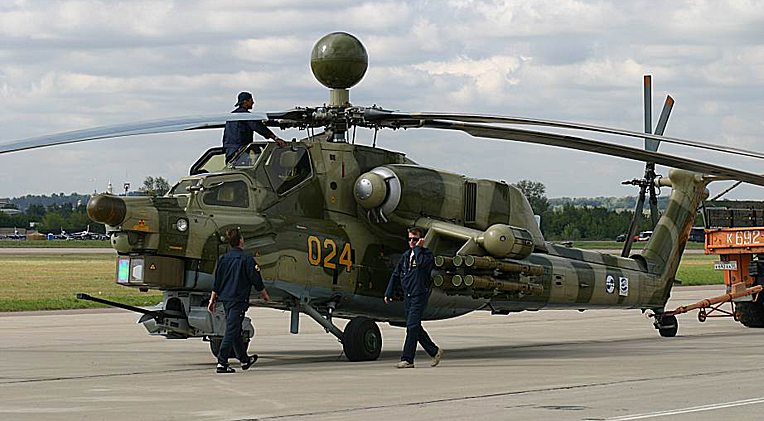
MOSCOW-(IDB) : The Mil Mi-28NE Havoc (Night Hunter) attack helicopter and 49 other military exhibits will be displayed by 14 Russian organizations at the 5th International Helicopter Industry Exhibition (HeliRussia 2012) in Moscow, the Federal Service for Military and Technical Cooperation reported.

The exhibition will be held on May 17-19 at the Crocus Expo exhibition center in the Russian capital’s northwest. Russia’s Industry and Trade Ministry is its organizer.


Russia’s state arms exporter Rosoboronexport, the Rostvertol and Kamov helicopter manufacturers and the Mil Moscow Helicopter Plant and other organizations will display products at the exposition.


Deputy Prime Minister Dmitry Rogozin will attend the exhibition’s opening.

The event will also be attended by over 100 representatives from 56 countries, including Afghanistan, Brazil, India, Saudi Arabia, the United States, Turkmenistan, France and others.


Overall, 147 Russian organizations and 53 foreign companies from 17 countries will participate in the exhibition

Source :  Defencetalk

Chengdu J-20 Could Enter Service By 2018

BEIJING-(IDB) : The stealthy Chengdu J-20 fighter could enter operational service by early 2018 and join a rapidly improving Chinese military armed with long-range strike weapons, new unmanned air vehicles and command and control aircraft fleets, the US Department of Defense says in an annual assessment. 

The J-20 is "still in a prototype phase," says David Helvey, the acting deputy assistant secretary of defense for East Asia for the US Department of Defense. 

"So we'd like to be able to continue to monitor it--to continue monitor developments on that to understand exactly what China may intend to use it for, and I wouldn't want to speculate at this point for what those specific missions would be," he adds. 

But the report itself says that the J-20 reflects "China's ambition to produce a fighter aircraft that incorporates stealth attributes, advanced avionics, and supercruise-capable engines."


The first J-20 prototype started flight tests in January 2011 and a second example started flying earlier this month. But the US government is adamant that the aircraft will not enter frontline squadron service until much later this decade.

"We expect the J-20 to achieve an effective operational capability no sooner than 2018," Helvey says. "That reflects our judgment and interpretation of how far they are along in doing the research and development and flight testing of the prototypes," he adds.

Operational capability as the DoD defines it means that there should be enough aircraft, weapons and trained air crew to conduct real-world missions, Helvey says.

The DoD also believes that the Chinese have an interest in developing new unmanned aircraft.

"We know that China is interested in developing unmanned air systems, and they have in the past acquired a number of different types of UAVs," Helvey says. "This report doesn't make a net assessment between China's capabilities for unmanned air systems and US capabilities, but that is an area that China is interested in developing."

China has a number of unmanned aerial vehicles including the Israeli-made Israel Aerospace Industries Harpy and a number of domestic types.

Meanwhile, the People's Liberation Army Air Force (PLAAF) is not neglecting its long-range strike capabilities. The country is upgrading its Tupolev Tu-16 Badger-derived Xian B-6 bomber fleet with a new, longer-range variation, which will be armed with new long-range cruise missiles, the report says.

The Chinese are also developing several types of airborne early warning and control system (AWACS) aircraft. These include the Shaanxi Y-8 Moth, based on the Antonov An-12, and the KJ-2000, based on the Ilyushin IL-76 airlifter, the report says.

Meanwhile, China's navy is moving on getting its first aircraft carrier into service. The refurbished Soviet-built ship started sea trials last August, but it not yet operational.

"This aircraft [carrier] could become operationally available to China's navy by the end of this year," Helvey says. "But we expect it'll take several additional years for an air group to achieve a minimal operational capability aboard the aircraft carrier."

The report also indicates that China is probably designing and possibly building in own indigenous carriers.
While China's public statements on its defence budget about $106 billion for 2012, the DoD estimates that the Chinese will actually spend more than $180 billion.

Helvey says the DoD believe that many aspects of China's military modernization actually comes from different spending accounts rather than the main defence budget. Foreign acquisitions such as Russian-built fighters are counted the same way. 

"For example, we think that some of their nuclear forces modernisation occurs off budget," he says. "So when you add all of that together, that helps us to develop, I think, a more accurate estimate of what the totality of the military expenditure is."

Source : FligthGlobal

Airbus Military upbeat on A400M in Indonesia

FG-(IDB) : Airbus Military is confident about the A400M's prospects in Indonesia and says it is open to collaborating with Dirgantara Indonesia on work share if Jakarta buys the airlifter. 

"If they buy the aircraft, we'll discuss with local industry how they can participate," says Ignacio Alonso, Airbus Military's senior vice-president for commercial, strategy, and industrial relations in Asia. "It's too soon to say how they could collaborate, but we are open to discussing collaboration."

"The A400M fits their current and future needs very well, both for military and humanitarian relief," he adds. 

He was speaking after the conclusion of the A400M's Asian debut tour in April. The trip saw aircraft MSN4 visit Malaysia, Indonesia, and Thailand. Malaysia is the first non-European nation to order the aircraft, with an order for four. During the Thailand visit, the Thai defence minister flew on the aircraft from Chiang Mai to Bangkok.

Alonso also provided more details about Indonesia's nine aircraft C-295 purchase that was announced at the Singapore air show in February. The aircraft will be operated by the Indonesian air force and will be designated CN-295 in Indonesian service. The Indonesian government is still arranging for the financing of the aircraft and Alonso expects the first two to be delivered this year. 

When it announced the CN-295 deal in February, Airbus Military said Dirgantara Indonesia will manufacture the tail empennage as well as the rear fuselage and fuselage panels. The final assembly line for the last two aircraft will be located in Indonesia and Dirgantara Indonesia will also establish a service centre.

Source : Flightglobal

Russia Pulls Out of Indonesian Rocket System Tender

MOSCOW-(IDB) : Russia’s arms trading company Rosoboronexport has pulled out of an Indonesian tender for the supply of multiple launch rocket systems, the company told Military Industrial Courier magazine.

The company pulled out because it had offered its Smerch rocket launcher system which “did not meet a range of technical conditions in the tender,” Rosoboronexport official Nikolai Dimidyuk said.
The Indonesian tender was released in February.

“No one wants to waste time, or lead partners into delusion,” he said. “That said, we remain of the opinion that this system fully meets the requirements of the Indonesian forces in the most important criteria, fighting effectiveness,” he said.

Rosoboronexport did not say in which criteria Smerch failed to meet Indonesian requirements.

Russia had offered a 22-ton variant of the Smerch system, but a more widely-sold variant weighs 48 tons.

Indonesia is a traditional Russian and Soviet arms customer and at present has contracts with Russia for delivery of Su-27SKM fighter aircraft, Mi-17 and Mi-35 military helicopters, and BMP-3 and BTR-80 infantry fighting vehicles.

Source : Rian